Metal roofing on two very different Penrith houses
Colorbond work around here splits neatly in two.
There are the estate houses — Jordan Springs, Caddens, Claremont Meadows, the later Glenmore Park stages — built from the start with steel roofs, where the work is repairs, extensions, storm damage and the occasional full replacement. Then there are the older brick-and-tile houses through South Penrith, Werrington, Colyton and St Marys where owners are converting away from tile, usually because the mortar has had enough of forty-degree Januaries and they do not want to do it again in fifteen years.
Both jobs are metal roofing. They have very little else in common.
Call (02) 4705 5100 for a free inspection and a written quote.
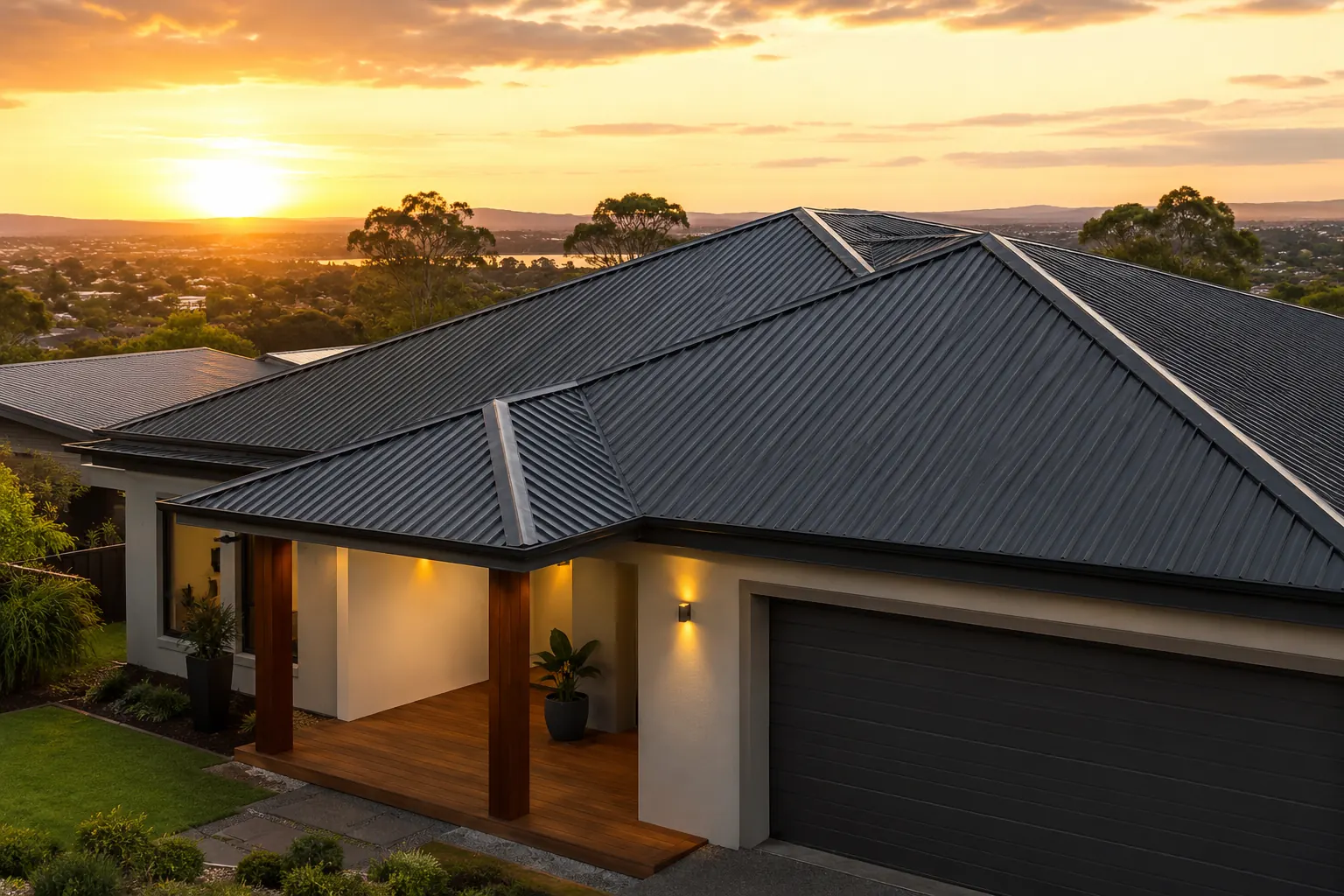
What we install and repair
- New Colorbond and metal roofs on houses, extensions, patios, carports and sheds
- Tile-to-metal conversions, including batten adjustment and full sarking
- Sheet replacement after hail, impact or storm damage
- Fastener replacement — the correct oversize screw and new seals, not a retighten
- Ridge, barge, apron and valley flashings
- Flashing and sealing around skylights, whirlybirds, solar feet, flues and vents
- Low-pitch verandah and alfresco roofs where tile is not an option
- Rust assessment: what is surface and can be treated, what has gone through
Heat, colour and the Penrith climate
This is the hottest corner of greater Sydney. Penrith Lakes recorded 48.9°C on 4 January 2020, the highest reading taken anywhere in the Sydney basin, and the council has spent a decade working on urban heat — mapping the hottest suburbs with UTS researchers, planting canopy, and pushing cool roof colours and materials through its Cooling the City Strategy.
For a homeowner choosing a roof, that translates into three practical things:
- Colour does real work. A lighter or mid-tone roof absorbs less solar heat than a dark charcoal. If you want the dark roof, go in knowing it leans harder on everything underneath it.
- Sarking is not optional. It is the second line of defence against water, the first line against radiant heat, and it kills most of the condensation problem.
- Ventilate the roof space. Hot air trapped above the ceiling radiates down all evening. Whirlybirds or ridge vents cost very little during an install and change how the house feels at ten at night.
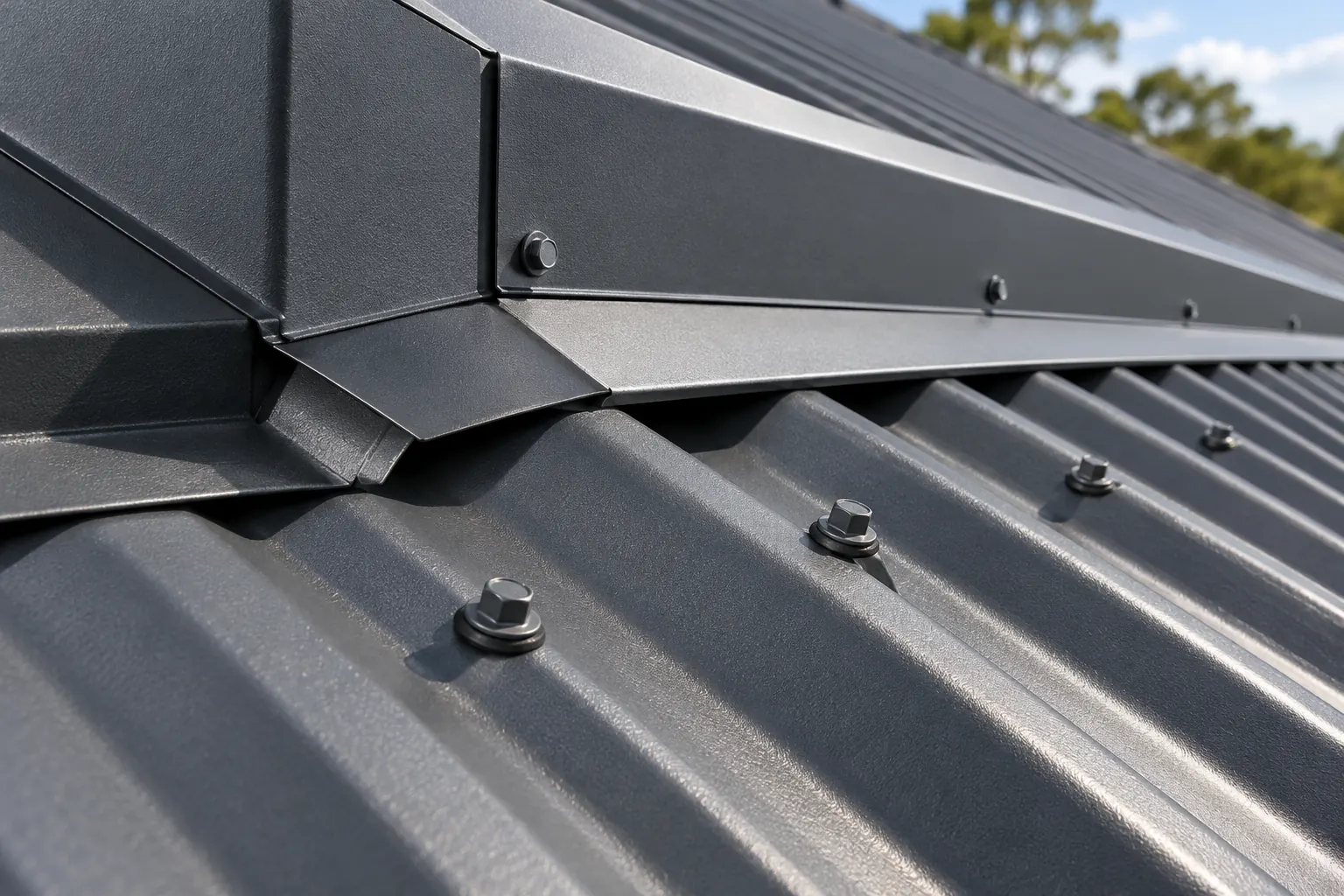
Why metal roofs fail out here
Metal roofs do not rot and they do not need repointing, which is exactly why people choose them. What they do have is movement and detail.
Thermal cycling at the fixings. Every hot day the sheets grow, every night they shrink. The fixings take that load thousands of times. Washers perish, screws lose tension, and the hole becomes a leak. On a Penrith roof this happens sooner than it would closer to the coast.
Flashings and penetrations. Nine out of ten metal roof leaks are not in the middle of a sheet. They are at a valley, a lap, an apron against a wall, or around something somebody drilled through the roof after it was built. Solar installations are a frequent culprit.
Hail dents and impact. Storms crossing the Cumberland plain can drop hail big enough to dimple steel. Dents are often cosmetic rather than a leak risk, but they matter for an insurance claim, which is why we photograph and document them — see roof inspections and reports.
Foot traffic. Antenna installers, air-conditioning techs and tree loppers walk roofs. Walking the pans instead of the ribs flattens a profile and ponds water.
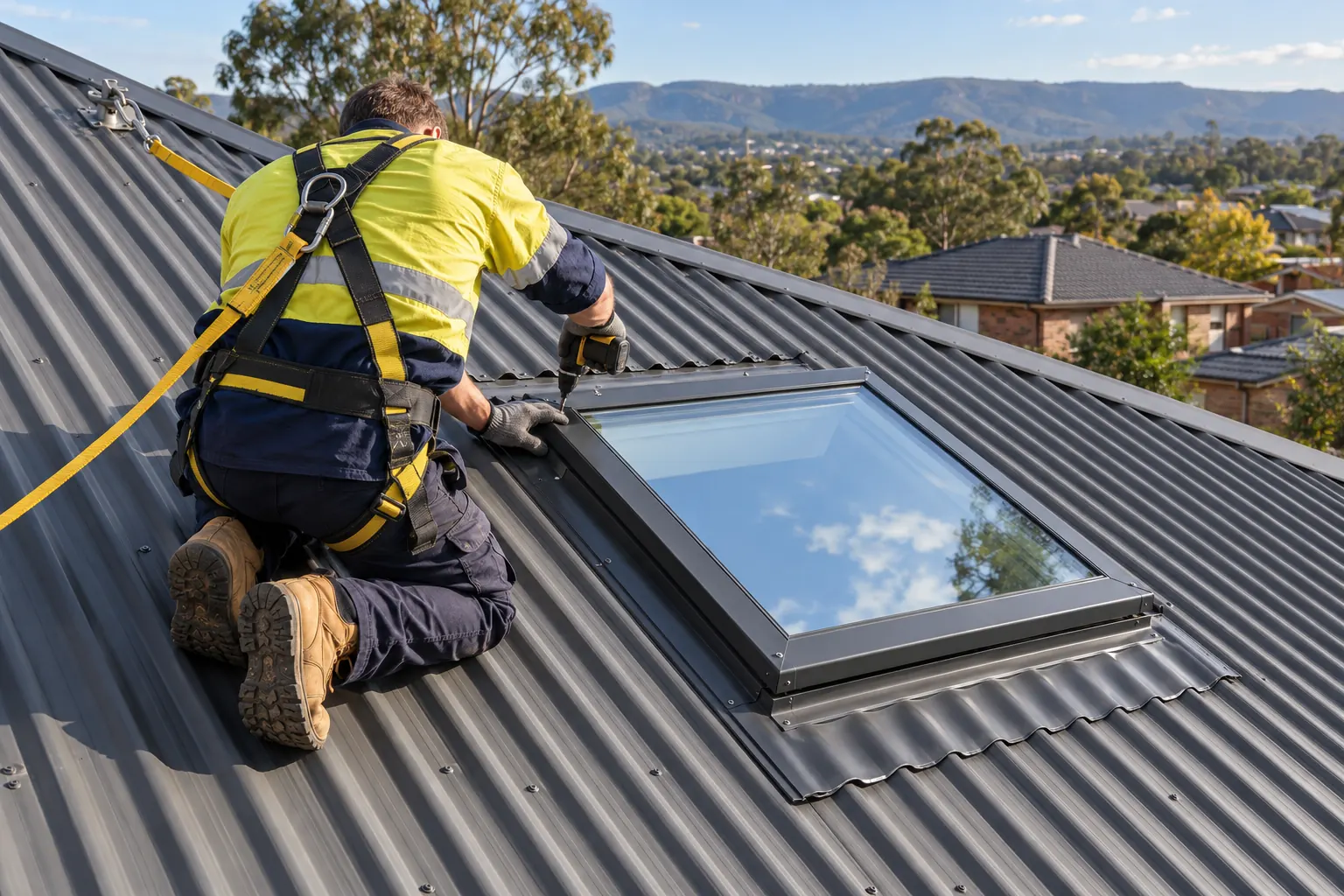
Converting a tile roof to metal
A conversion is a genuine project rather than a surface swap. The sequence we work to:
- Inspect the roof space first — the frame, the battens and any timber damaged by old leaks
- Scaffold, edge protection and ground protection
- Strip the tiles and remove all waste from site
- Repair or replace any battens and timber that need it, with the finding reported before the work
- Re-batten to the spacing the chosen profile requires
- Sarking across the full roof plane
- Lay and fix sheets, then flash every ridge, hip, valley, barge and penetration
- Gutters, downpipes and ventilation reinstated or replaced as agreed
The weight saving is often the quiet benefit: a steel roof puts far less load on an older frame than concrete tile. If your roof is still better suited to tile, say for streetscape reasons in the older suburbs, the replacement page covers that path.
What it costs
Driven by roof area, pitch, profile, colour availability, complexity (hips, valleys, penetrations) and access. A conversion costs more than a sheet-for-sheet replacement because there is a strip-out, waste removal and a re-batten in front of it. A low-pitch patio is at the other end entirely.
We measure the roof, write the quote with items separated, and leave the decision with you. No pressure and no obligation.
Book a metal roofing quote
Ring (02) 4705 5100 or send through the details. We work across the whole Penrith service area, including Jordan Springs, Caddens and Claremont Meadows.