Roof Repairs
Repairs across Penrith and the Nepean, where summer heat cracks bedding mortar and storm wind lifts ridge caps.
DetailsA brown stain on the ceiling, a cracked ridge cap on the lawn, a gutter that overflows in every storm. We look at it for free and tell you what it actually needs.
Repairs across Penrith and the Nepean, where summer heat cracks bedding mortar and storm wind lifts ridge caps.
DetailsFull re-roofing from the brick-and-tile streets of South Penrith to acreage homes at Mulgoa and Londonderry.
DetailsColorbond roofing across the Nepean, chosen for heat performance as much as for how it looks.
DetailsTile restoration for Penrith roofs: rebedding and repointing ridges the heat has broken down, then recoating.
DetailsGutter replacement and leaf guard across Penrith, sized for the runoff a Nepean valley storm actually delivers.
DetailsStorm and hail call-outs across Penrith and St Marys: make-safe first, insurance documentation second, permanent repair third.
DetailsRoof inspection reports across the Nepean for pre-purchase, end-of-lease and insurance purposes.
DetailsThe Nepean valley is the hot end of Sydney. Penrith Lakes holds the highest temperature ever recorded in the Sydney basin, 48.9°C on 4 January 2020, and the surface of a dark tile roof sits well above the air temperature on any ordinary January afternoon. Roofs here expand and contract through a bigger daily swing than anything on the coast, and the first thing to give is the mortar.
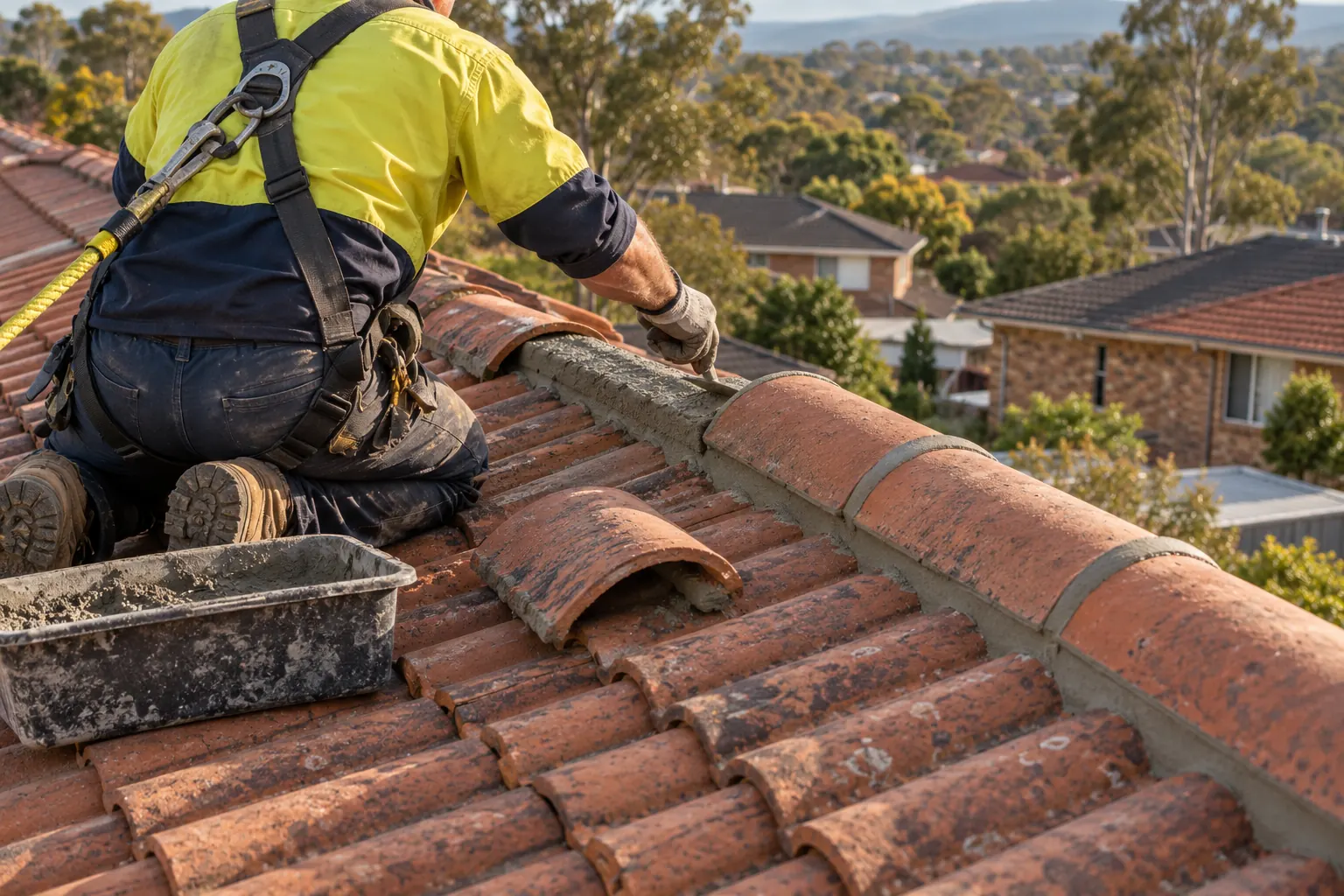
That shows up as hairline cracks along the ridge and hip lines, then crumbling bedding, then a cap you can rock with one hand. Add the storms that build over the Blue Mountains escarpment and run out across the Cumberland plain, and you get the two faults we are called out for more than anything else: failed pointing and wind-lifted ridge caps.
Call (02) 4705 5100 and we will come and look at it. The inspection and the written quote cost nothing.
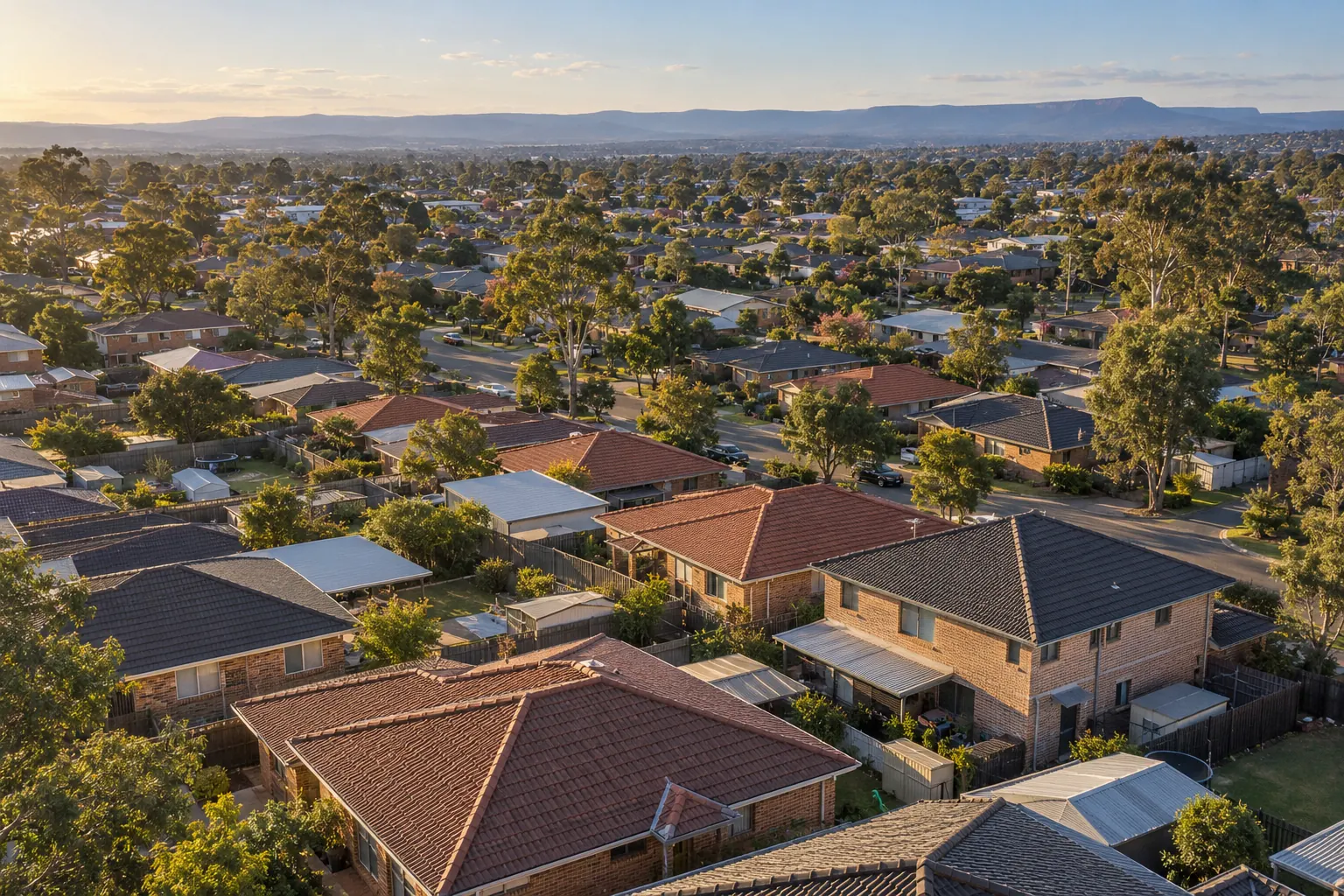
Penrith is not one roof type. Roughly speaking, the work splits in half.
The established brick-and-tile belt runs through South Penrith, Cambridge Park, Colyton, Oxley Park, Werrington and St Marys. Concrete and terracotta tiles from the 1950s through the 1980s, many on their original bedding, most of them now porous enough to hold moss on the south-facing pitch. These roofs rarely need replacing. They need restoration — a clean, a rebed and repoint of every ridge and hip, broken tiles swapped out, then a sealer and coat.
The newer estates at Jordan Springs, Caddens, Claremont Meadows and the later stages of Glenmore Park are mostly Colorbond or lightweight tile over sarking. Different failure mode entirely: fastener and flashing problems rather than mortar, with valleys and penetrations around solar, skylights and whirlybirds doing most of the leaking. That is metal and Colorbond work.
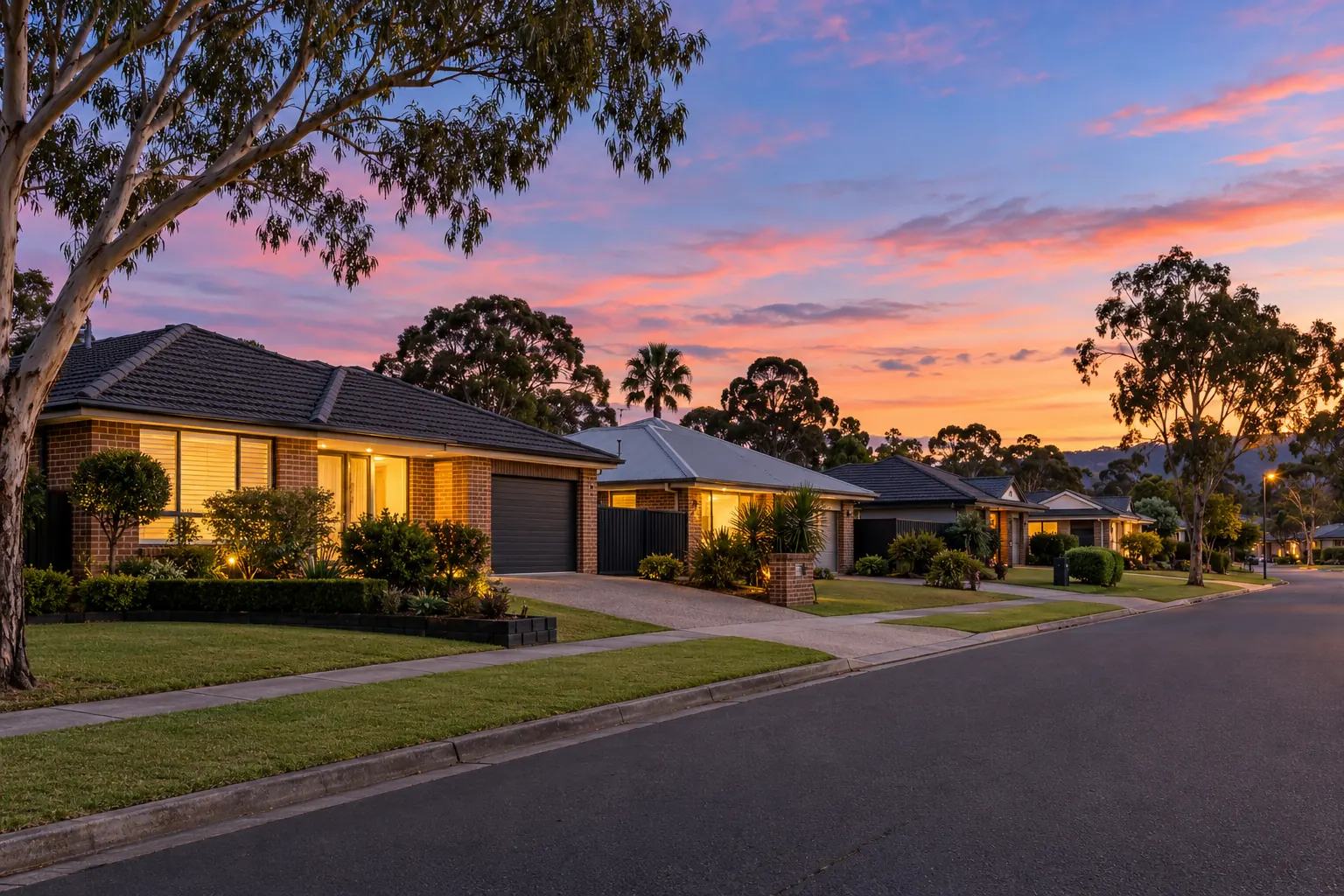
Then there is the rural-residential fringe at Mulgoa, Orchard Hills, Llandilo, Castlereagh and Londonderry, where roofs are bigger, gutters are longer, and the gum litter never stops.
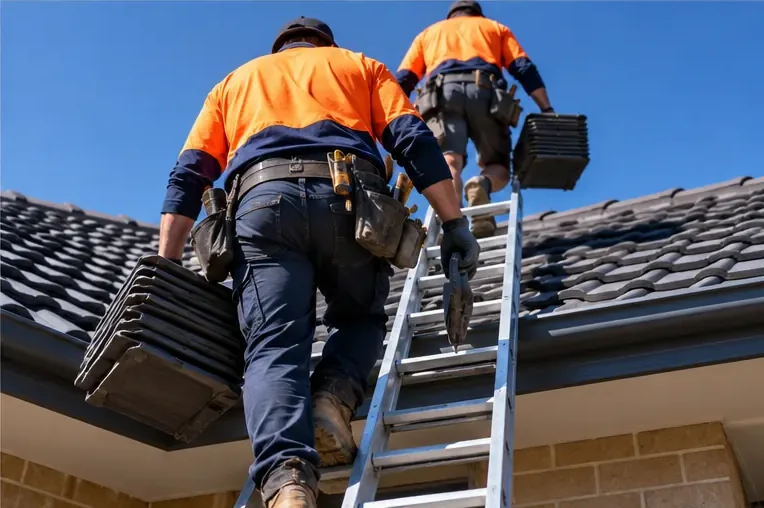
Someone gets on the roof, or puts a drone over it where access is poor, and checks the roof space from inside as well. A ceiling stain is almost never directly under the hole. The point of the inspection is to find where water is actually getting in, not to sell you the biggest job available.
An itemised quote: what is being done, what materials, what is excluded. If part of the roof can wait a season, we will say so. No pressure and no obligation — plenty of people get the inspection, take the report, and do nothing for a year.
Work is carried out by established, licensed and insured roofing contractors working to NSW Fair Trading requirements, and every completed job carries a written workmanship warranty.
Honest answer: we will not quote a figure down the phone, because the numbers that matter are the ones you cannot see from the kerb. Roof size and pitch, tile or metal, how much of the pointing has gone, whether the battens underneath are still sound, access for a tipper and scaffold on a narrow Jamisontown block versus an open acre at Londonderry, and whether the leak has already reached the plasterboard. Two houses in the same street routinely quote differently.
What we can promise is that the quote follows the inspection, in writing, with the parts you could defer flagged as deferrable.
From Emu Plains and Leonay at the foot of the escarpment, across the river through Penrith, Jamisontown and South Penrith, out east to St Marys, St Clair and Erskine Park, north to Cranebrook and Jordan Springs, and south through Glenmore Park to Mulgoa. See the full list of suburbs we cover.
Ring (02) 4705 5100 or send through the details and we will book a free inspection. If it turns out to be a fifteen-minute fix, we will tell you that too. More about how this service works.
We inspect at no cost and give you a written quote with the work itemised.
Work is carried out by established, licensed and insured roofing contractors working to NSW Fair Trading requirements.
Documented inspections and reports suitable for an insurance claim after a storm.
Every job carries a written workmanship warranty.
Not listed? Call (02) 4705 5100 — we cover the surrounding area too.
Nobody can give you a real number without getting on the roof. The price moves with roof size, pitch, whether it is tile or metal, how close the house sits to the boundary for access, and how far water has already travelled through the battens and ceiling. A handful of replacement tiles and a section of repointing is a small job. A leak that has been running for two summers is not. We inspect first, then quote in writing with the work itemised, and you decide.
It is not an emergency, but it is the single most common reason Penrith roofs start leaking. Mortar that has been through a run of 40-degree days expands, contracts and eventually loses its grip on the cap. Once a crack opens, storm-driven rain tracks under the cap and into the roof space, usually appearing as a ceiling stain a metre or two away from the actual entry point. Caught early it is a rebed and repoint. Left alone it becomes timber and plaster work.
Usually not. Repairing or replacing non-structural roof cladding is generally treated as exempt development under the NSW Codes SEPP, which means no development application. That changes if your place is heritage listed, if you are altering the roof structure or pitch, or if a property-specific control applies. Penrith City Council publishes an exempt development factsheet and its planning team will confirm for your address. We will tell you if we think your job needs a closer look.
Yes. The rural-residential belt around Penrith is part of the regular run, and those roofs have their own problems: long gutter lines under established gums, large shed and dwelling roofs in one job, tank water that collects everything the roof collects, and bushfire-prone land where leaf litter in a gutter is a genuine risk. Access for a truck and scaffold is worth mentioning when you call so we bring the right gear the first time.
Call us and we will make the roof safe first. Once the weather clears we inspect properly, photograph the damage, and write it up as a report your insurer can work from, including which tiles or sheets are impact damaged and which are simply old. We do not handle the claim for you, but a documented inspection is usually what decides whether a claim is accepted or argued over.
Tell us what you need and we'll get straight back to you. Prefer to talk? Call (02) 4705 5100 and speak to someone local.
Call (02) 4705 5100