If there is water in the house now
Ring (02) 4705 5100 and say that it is an active leak so it gets triaged ahead of routine work.
While you wait:
- Kill the power to any circuit where water is near a light, fan or downlight. This is the part people skip and the part that hurts.
- Move furniture, electronics and rugs out from under the drip.
- Contain the water. A bucket, towels, and if a ceiling is sagging with trapped water, a small hole at the low point so it drains instead of the sheet letting go all at once.
- Photograph everything before you clean up. Ceiling, walls, contents, and the outside of the house if you can do it safely.
- Stay off the roof. Wet tile and wet steel are both treacherous, and a roof that has just been hit by hail has cracked tiles you cannot see.
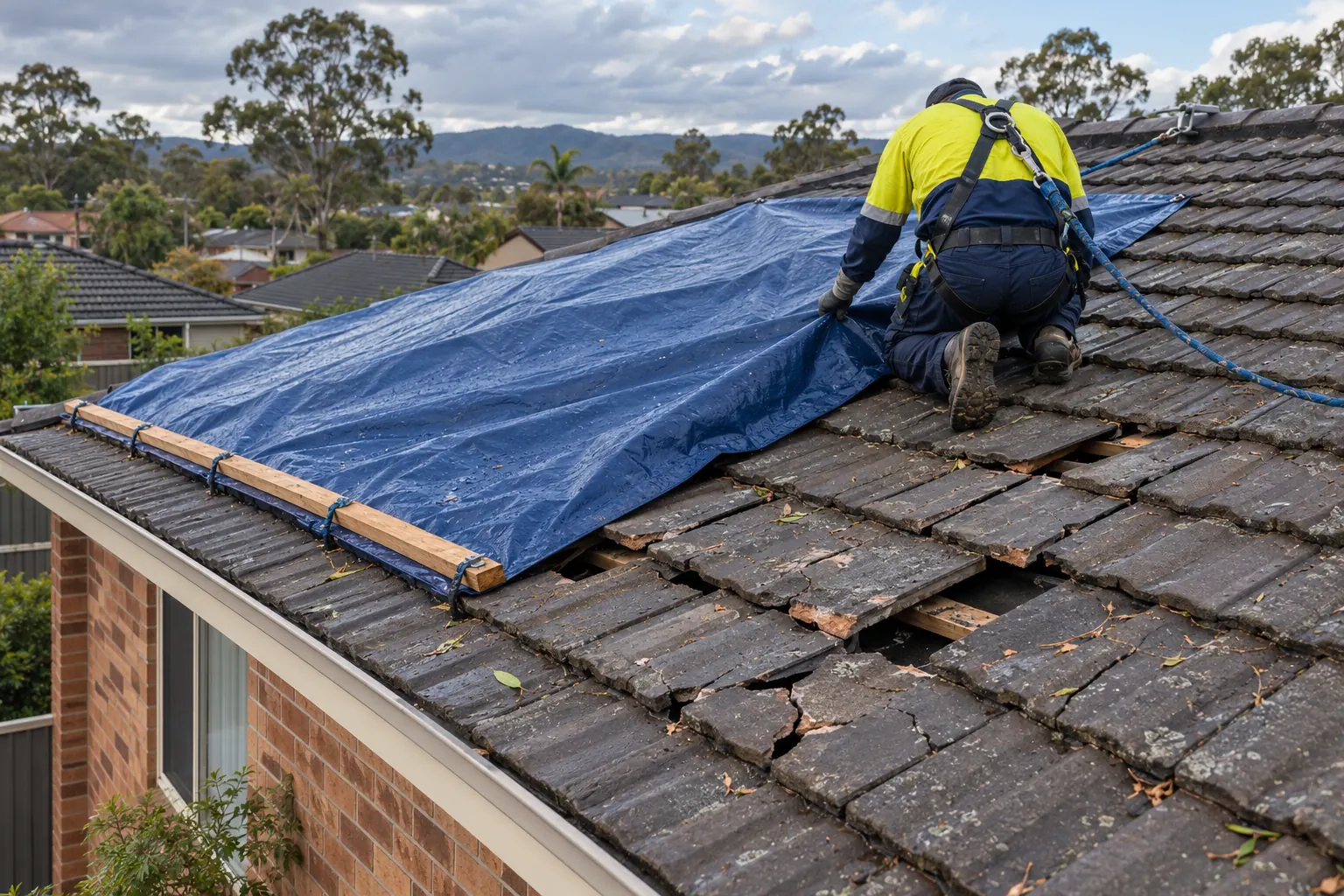
What we do on a storm call-out
Make-safe first
The immediate job is stopping more water getting in and stopping anything falling off the roof. Tarping over an opened section with battened edges so it holds in wind, removing or securing loose and broken tiles, re-seating displaced ridge caps, clearing valleys and gutters that are backing water into the eaves, and temporarily sealing the identified entry point.
Then the assessment
Once the weather is safe to work in, a full inspection — roof surface, ridge lines, valleys, flashings, gutters, and the roof space from inside. Photographed as we go. That is what tells you whether you are looking at a handful of tiles or a section of roof.
Then the permanent repair
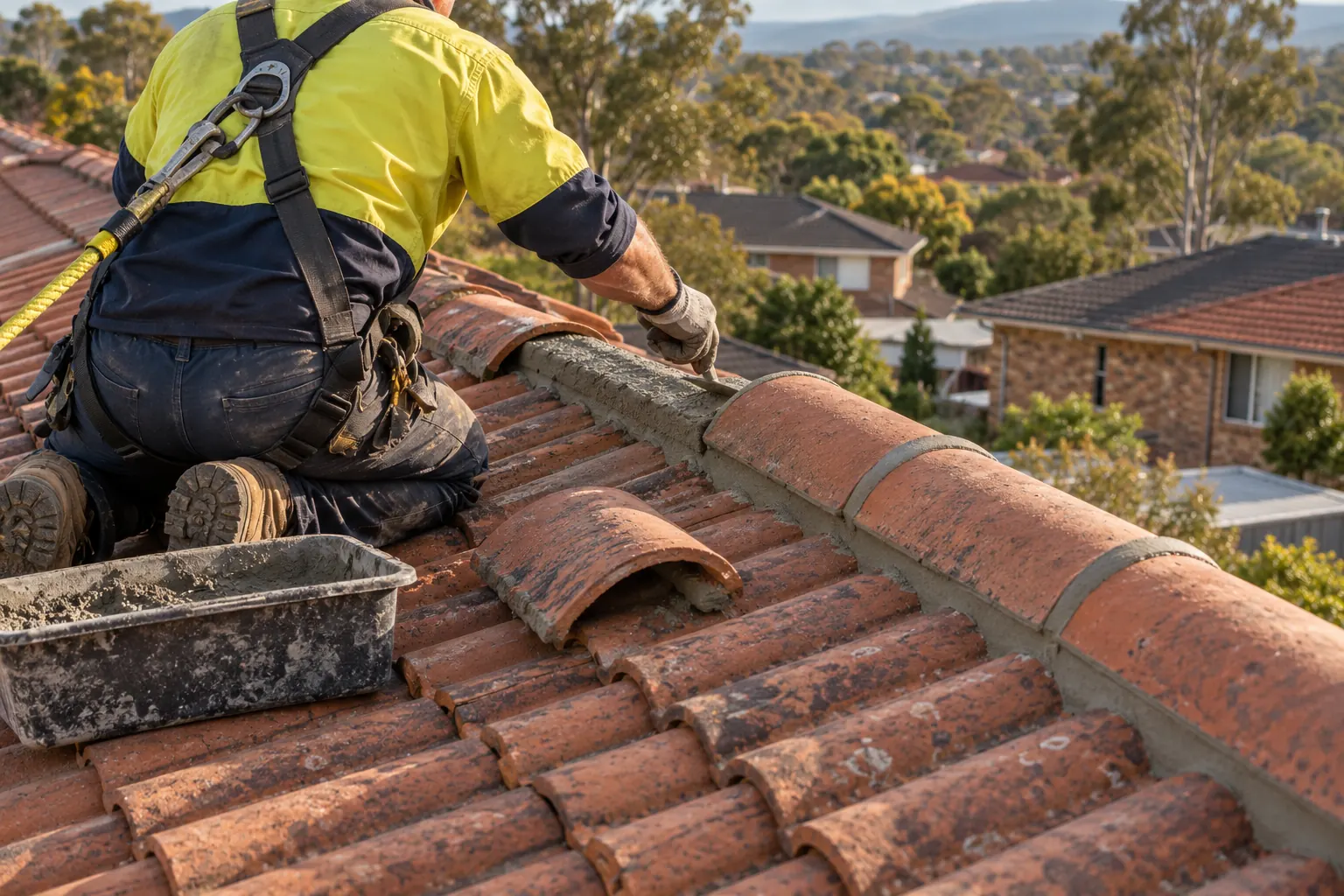
Scoped and quoted in writing. On a tile roof that usually means tile replacement plus rebedding and repointing the affected ridges, because wind rarely lifts a cap that had sound mortar under it. On a metal roof it is sheet replacement, fasteners and flashings. Details on both are on the roof repairs page.
The storm damage we see across the Nepean
Wind-lifted and displaced ridge caps. The most common. Storms crossing the Cumberland plain hit a roof whose bedding has already been weakened by years of heat cycling.
Hail-cracked tiles. Terracotta and concrete tiles crack under impact, often without moving. They look fine from the kerb and leak in the next rain event.
Dented metal sheeting. Frequently cosmetic rather than a leak risk, but dents are assessable damage and need to be documented properly.
Branch and debris strikes. Established gums across the older suburbs and the acreage belt drop heavy limbs. A strike usually takes out several tiles and sometimes a batten.
Gutter and valley overflow. A storm that dumps its rain in twenty minutes will find any gutter that is short on capacity or full of leaf litter. See gutter repair and replacement.
Debris-blocked downpipes forcing water back up under the roof edge and into the eaves lining.
Documentation that an insurer can actually use
A rejected or argued claim usually comes down to evidence. What we provide after a storm inspection:
- A written report describing the damage, location by location
- Dated photographs, including close-ups of impact damage and wide shots for context
- A clear separation of what is storm damage and what is age-related wear — insurers look for this, and a report that claims everything is storm damage gets less traction, not more
- An itemised repair quote
- A record of the make-safe work carried out and when
We are roofers, not claims managers. We do not negotiate with your insurer. But handing an assessor a complete, dated, photographed file is the single most useful thing you can do. There is more on this on the roof inspections and reports page.
Preparing before the next one
Storm season in western Sydney runs through the warmer months, and the NSW SES publishes practical guidance on preparing a property. From the roofing side, the maintenance that actually reduces storm damage is unglamorous:
- Repoint ridges before they fail, not after
- Clear gutters and valleys before the season, and fit guard on leafy and bushfire-prone blocks
- Replace cracked tiles when you find them rather than leaving them
- Cut back branches overhanging the roof
- Check that downpipes discharge somewhere sensible
What storm work costs
A make-safe is priced on its own and depends on how much area has to be covered, the pitch, the height and whether it is after hours. The permanent repair is quoted separately after the inspection, so you are never agreeing to an open-ended job while standing in a wet hallway.
If you are claiming, the quote is written in a format your insurer can read.
Call for storm or emergency roof help
(02) 4705 5100, or send the details if it is not urgent. We respond across the Penrith and Nepean area, including Cranebrook, Werrington and Erskine Park.